How to Write a Cold Email: Templates, Data, and the 3-Line Rule
By Chris Stefaner, Co-founder of Swizero
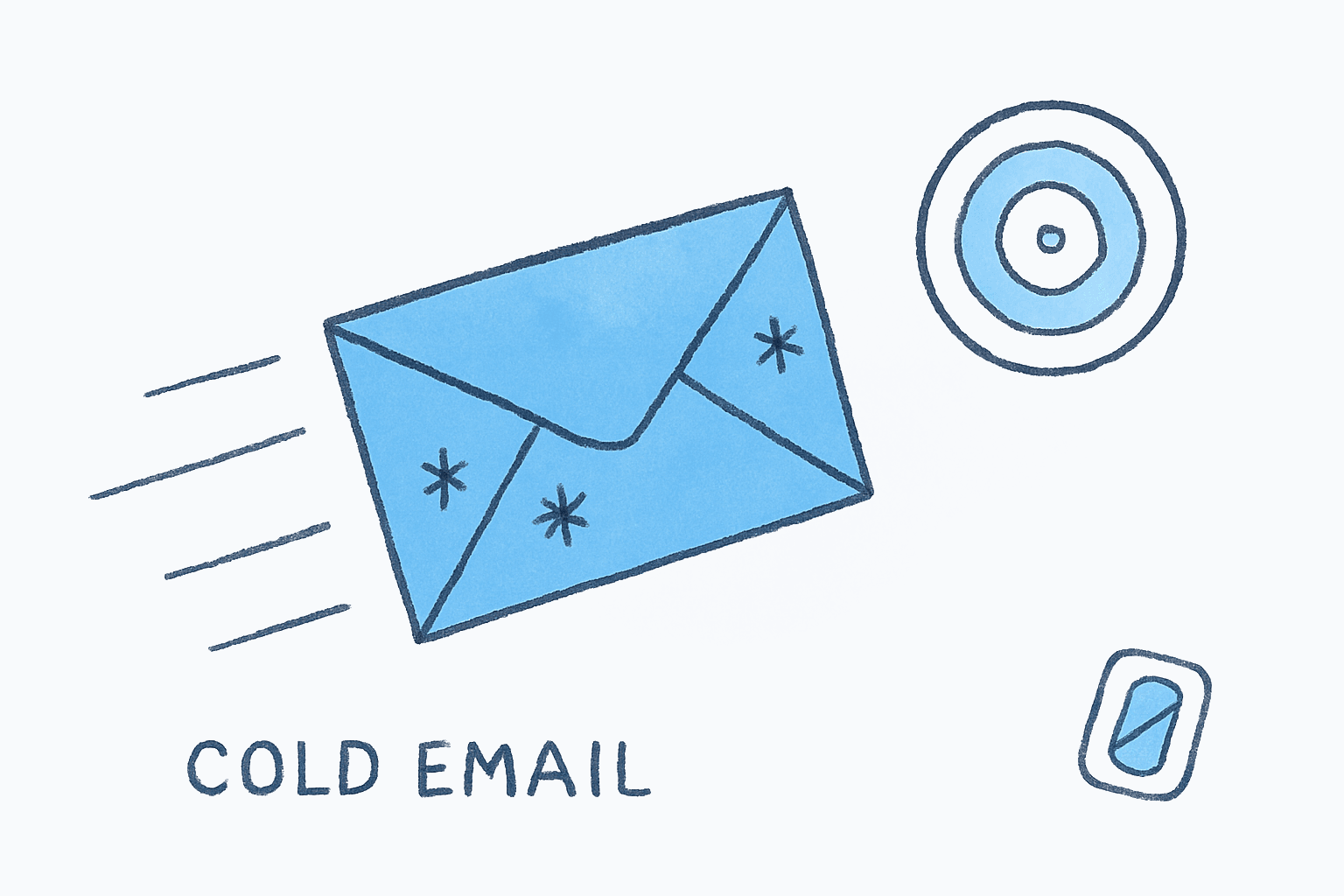
The best cold emails share three traits: they are short (under 100 words), specific to the recipient, and structured around a single ask. If you learn how to write a cold email with those three constraints, your reply rate will beat the 3.4% average by a wide margin.
Most cold outreach fails not because the product is wrong or the timing is off, but because the email asks too much of a stranger. You are competing against 121 other emails in someone’s inbox. The ones that get replies respect the reader’s time and make responding effortless.
This guide covers the data behind what works, a dead-simple structural formula called the 3-line rule, and seven copy-paste cold email templates for sales, networking, partnerships, job inquiries, and media pitches.
What Is the 3-Line Rule?#
The 3-line rule is a cold email structure popularized by sales leaders Armand Farrokh and Nick Cegelski. The format is three short blocks of text, each no more than three lines when viewed on a phone. If your email requires more than one scroll on a mobile screen, it is too long.
The three blocks follow a simple pattern:
- Context. Show that you know something specific about the recipient. A recent funding round, a job change, a podcast appearance, a company milestone. This proves you did not blast 10,000 people with the same message.
- Value. Bridge that context to a single problem you can help solve. One sentence. Not a feature list.
- Ask. A low-friction call to action. “Worth a 15-minute call?” or “Open to hearing more?” Not “Please find attached our 14-page deck.”
That is the entire email. Three blocks, three lines each, one scroll on mobile. The rest of this guide explains why this structure works and gives you templates that follow it.
Why Do Most Cold Emails Fail?#
Most cold outreach emails fail because they are too long, too generic, or both. Here is what the data says.
Instantly’s 2026 Cold Email Benchmark Report analyzed millions of outbound emails and found the average cold email response rate has dropped to 3.4%, down from 8.5% in 2019. The decline tracks directly with inbox volume: recipients have more email, less patience, and better spam filters.
Three specific failure modes account for most of the drop:
| Failure Mode | Impact on Reply Rate | Fix |
|---|---|---|
| Email over 200 words | 2.4x lower reply rate vs. 50-125 words | Use the 3-line rule |
| No personalization | Generic emails get under 1% reply rate | Add one specific detail about the recipient |
| Multiple CTAs or asks | Dilutes urgency, reduces clarity | One ask per email |
Hunter.io’s State of Cold Email analysis of 11 million emails confirmed that personalization depth (not just inserting a first name) drives 52% higher reply rates and that smaller, targeted campaigns outperform broad blasts by 2.76x.
The pattern is clear. Shorter, more specific, one ask. Everything in the 3-line rule addresses the top three reasons cold emails die in someone’s inbox.
How Long Should a Cold Email Actually Be?#
A cold email should be between 50 and 125 words. That range produces the highest reply rates across multiple large-scale studies.
Instantly’s benchmark data shows emails under 80 words performed best among top campaigns. Hunter.io’s word count analysis of 34 million cold emails found the 75-100 word sweet spot produced a 3.8% reply rate, the highest of any length bracket. Emails over 200 words saw reply rates drop by more than half.
There is a practical reason beyond the data: 67% of B2B emails are first opened on mobile devices. At 75-100 words, the entire message is visible without scrolling. Once an email requires scrolling, completion rates drop by 40%.
Here is an easy test: write your cold email, then read it on your phone. If you have to scroll more than once, cut it in half.
I’ll be honest: cutting emails down to this length is the hardest part. You want to explain your product, list your credentials, share three case studies. Resist. The goal of a cold email is not to close a deal. It is to start a conversation.
Does Personalization Actually Matter?#
Personalized cold emails receive roughly double the reply rate of generic ones. The effect is not subtle.
Woodpecker’s analysis of cold email campaigns found that highly personalized messages using multiple custom data points boosted replies by 142% compared to non-personalized blasts. Meanwhile, research from Yes Lifecycle Marketing showed that personalized subject lines alone increase open rates by 50%.
But “personalization” does not mean {first_name} merge tags. Every spam email does that. Real personalization means referencing something the recipient would recognize as researched:
- A specific blog post they wrote
- A recent company announcement
- A mutual connection or shared community
- A challenge common to their role or industry
The key distinction: merge tags personalize the email. Research personalizes the relationship.
Only 5% of senders personalize every cold email, according to Martal Group’s 2026 B2B Cold Email Statistics. Those who do get 2-3x better results. The math favors sending 50 highly personalized emails over 500 generic ones.
If you already practice writing emails with the reader in mind, cold email personalization will feel natural. The same principle applies: write for one specific person, not for “anyone who might be interested.”
What Makes a Cold Email Subject Line Work?#
Short subject lines between 21 and 40 characters achieve the highest open rate at 49.1%, according to data compiled by Sales So’s 2025 email subject line analysis. At that length, the full subject line is visible on mobile without truncation.
Three patterns consistently outperform generic subjects:
Trigger-event subject lines achieve the highest open rates at 54.7%. These reference something that just happened to the recipient: “Congrats on the Series B” or “Saw your talk at SaaStr.” They signal that the email is timely and researched.
Company name personalization offers a 21.9% lift with minimal effort. “Quick question for [Company]” outperforms “Quick question” every time because it passes the “is this spam?” filter instantly.
Question-format subject lines boost open rates by 21%. “Still using spreadsheets for [process]?” or “How does [Company] handle X?” triggers curiosity without feeling clickbaity.
What does not work: subject lines that sound like marketing (“Unlock your potential with…”), use ALL CAPS, or contain the word “free.” These are spam triggers, not conversation starters.
For deeper guidance on how to start an email and how openers set the tone, that guide covers additional patterns worth pairing with your subject line strategy.
How to Write a Cold Email: 7 Templates That Follow the 3-Line Rule#
Each template below is under 100 words. Copy, customize the bracketed sections, and send. The structure is always context, value, ask.
Template 1: Sales Outreach#
Subject: [Trigger event] at [Company]
Hi [Name],
Noticed [Company] just [specific trigger: launched a new product, expanded to a new market, hit a hiring milestone]. Congrats.
We help companies at that stage solve [specific problem] without [common pain point]. [One sentence of proof: “We cut onboarding time by 40% for [similar company].”]
Worth a quick call this week?
[Your name]
Template 2: Networking / Relationship Building#
Subject: Loved your take on [topic]
Hi [Name],
Your [post/talk/podcast episode] about [topic] resonated, especially the part about [specific detail]. I have been thinking about the same problem from the [your angle] side.
Would you be open to a 15-minute chat? No pitch, just genuinely curious about your perspective.
[Your name]
Template 3: Partnership Proposal#
Subject: [Your Company] + [Their Company]
Hi [Name],
I run [Your Company], and we serve a similar audience to [Their Company] but from the [your angle] side. Our users keep asking about [their product category], which made me think of you.
Would you be open to exploring a partnership? I have a few specific ideas that could work for both sides.
[Your name]
Template 4: Job Inquiry#
Subject: [Role type] at [Company] / [Your name]
Hi [Name],
I have been following [Company] since [specific milestone or detail]. Your approach to [specific thing they do well] is what drew me in.
I am a [your role] with [X years] of experience in [relevant skill]. I would love to learn whether there is a fit on your team.
Happy to send my resume or portfolio if you are open to it.
[Your name]
Template 5: Media Pitch#
Subject: Story idea: [one-line hook]
Hi [Name],
You covered [specific topic in their recent article]. There is a related angle that has not gotten much press: [your unique angle in one sentence].
I can share [data/expert access/exclusive info] to support the story. Would this be worth exploring?
[Your name]
Template 6: Investor Outreach#
Subject: [Company] / [one-line traction metric]
Hi [Name],
[Your Company] is [one sentence description]. We have [one traction proof point: revenue, users, growth rate].
I noticed you led [specific investment in similar company], which made your fund feel like a natural fit. Would you have 20 minutes to hear our story?
[Your name]
Template 7: Re-engagement (Warm-Cold)#
Subject: Still thinking about [topic from last conversation]
Hi [Name],
We chatted briefly at [event/context] about [topic]. Since then, [something relevant has changed: you shipped a feature, they announced something, the market shifted].
Would it make sense to pick that conversation back up?
[Your name]
For guidance on the follow-up sequence after your initial cold outreach, our guide on how to write a follow-up email covers timing, cadence, and templates for messages two through five.
If you are on the receiving end of cold emails and they keep piling up unread, Swizero forces the decision. A fixed card limit means every email gets a quick yes or no, so cold pitches never rot at the bottom of an infinite scroll.
Tips for Writing Cold Emails That Get Replies#
-
Send Tuesday through Thursday, 8-11 AM in the recipient’s time zone. This window consistently produces the highest open rates across cold email benchmarks. Monday inboxes are flooded, and Friday attention is already gone.
-
Use one call to action. Every additional ask dilutes the first one. “Worth a call?” is better than “Check out our site, watch this demo, and let me know your thoughts.” If you need more on structuring email asks, our guide to email productivity tips covers how top professionals keep messages actionable.
-
Write your subject line last. You will not know the best angle until you have written the body. The subject line should match the most specific, most human line in your email.
-
Do not attach files to a first cold email. Attachments trigger spam filters and feel presumptuous. If you have a deck or case study, mention it and offer to send it as a follow-up.
-
Test one variable at a time. Change the subject line OR the opening line OR the CTA. Never all three. Otherwise you cannot learn what moved the needle. Even small improvements compound: going from a 3% to a 5% reply rate doubles your pipeline over a quarter.
-
Read it on your phone before sending. If the email does not fit on one screen, it is too long. This single check catches most of the structural problems that kill cold email response rates.
Frequently Asked Questions#
How many cold emails should you send per day?#
Most deliverability experts recommend 30-50 cold emails per day per email address. Exceeding that threshold risks triggering spam filters, especially with newer domains. If you need higher volume, use multiple sending addresses and warm each one for at least two weeks before starting outreach.
What is a good cold email response rate?#
A good cold email response rate falls between 5% and 10%. The overall average in 2026 is approximately 3.4%, according to Instantly’s benchmark data. Campaigns that combine personalization, short copy, and targeted lists regularly achieve 10-15%.
How soon should you follow up on a cold email?#
Send your first follow-up 3-5 business days after the initial email. The first email captures roughly 58% of total replies, with follow-ups accounting for the remaining 42%. Most recipients who will reply do so after the second or third touch, not the first.
Should you use a template or write each cold email from scratch?#
Use a template for structure, then customize the context section for each recipient. The 3-line rule template gives you a consistent skeleton while leaving room for specific personalization. Writing each email entirely from scratch is unsustainable at any meaningful volume.
Is cold emailing legal?#
Cold emailing is legal in most countries, but regulations vary. In the United States, the CAN-SPAM Act requires a clear opt-out mechanism, a valid physical address, and honest subject lines. The EU’s GDPR imposes stricter rules on B2B outreach, often requiring a legitimate interest basis. Always include an unsubscribe option and honor opt-out requests promptly.
What is the best time to send a cold email?#
Tuesday through Thursday between 8 AM and 11 AM in the recipient’s local time zone consistently produces the highest open and reply rates. Avoid Mondays (inbox backlog), Fridays (low engagement), and weekends.
How do you write a cold email for networking?#
Start by referencing something specific the person said, wrote, or built. Then explain why their perspective matters to your work in one sentence. Close with a low-pressure ask like “Would you be open to a 15-minute call?” Networking emails work best when there is no hidden sales agenda.
Sources#
- Cold Email Benchmark Report 2026. Instantly, 2026. Average reply rate of 3.4%, emails under 80 words perform best.
- The State of Cold Email. Hunter.io, 2026. Personalization depth drives 52% higher reply rates; targeted campaigns outperform blasts by 2.76x.
- Cold Email Word Count Analysis. Hunter.io, 2026. Analysis of 34 million emails; 75-100 word sweet spot at 3.8% reply rate.
- Cold Email Statistics. Woodpecker, 2026. Multi-field personalization boosts replies by 142%.
- B2B Cold Email Statistics 2026. Martal Group, 2026. Only 5% of senders personalize every email.
- Email Subject Line Statistics 2025. Sales So, 2025. Subject lines of 21-40 characters achieve 49.1% open rate.
- Cold Email Statistics 2025. SalesCaptain, 2025. Personalized subject lines increase open rates by 50%.
- The 3x3 Rule for Cold Emails. Armand Farrokh, 30 Minutes to President’s Club. Three blocks, three lines, one scroll.
Your inbox doesn't have to feel like this.
Apply what you just learned, faster.
Put this into practice with Swizero