Email Management for Doctors: How to Triage Your Inbox Like You Triage Patients
By Chris Stefaner, Co-founder of Swizero
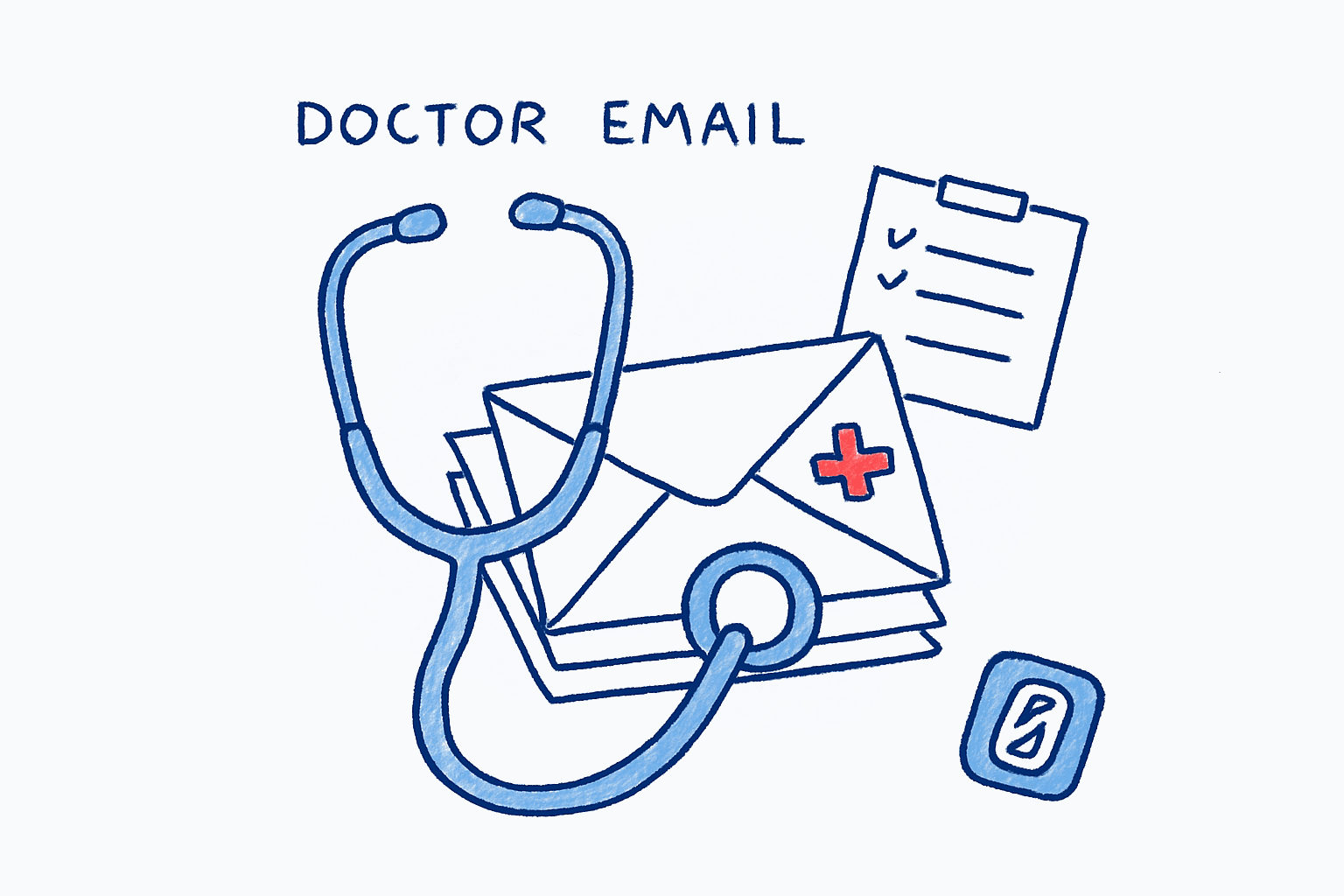
Physicians already know how to triage. They learned it in residency, practice it in trauma bays, and apply it instinctively when a waiting room fills up. The problem is that nobody taught them to apply that same logic to the other emergency filling up their day: the inbox. Email management for doctors is treated as a productivity problem. It is actually a clinical judgment problem.
Primary care physicians receive an average of 77 EHR inbox notifications per day, according to a 2021 study published in the Journal of the American Medical Informatics Association (JAMIA). That figure covers only clinical messages inside the EHR. It does not include the regular email that arrives separately: administrative updates, CME reminders, committee threads, insurance correspondence, scheduling changes. When you add those channels together, many physicians are processing well over 100 messages daily across two completely separate inboxes that do not talk to each other.
Here is the editorial position that frames the rest of this piece: the physician inbox crisis is not a volume problem. It is a boundary problem. Email has no finish line. The EHR inbox has no finish line. Neither system tells a physician, “You are done for today.” And without that signal, the work bleeds into the hours the profession euphemistically calls “pajama time,” the unpaid evening labor that the National Academy of Medicine identifies as the core of its “1.2-FTE Problem”: clinicians doing 1.2 full-time jobs of work while being paid for one.
Key Takeaway
Email management for doctors fails when it borrows generic productivity advice designed for knowledge workers without clinical liability. Physicians need inbox systems built around the triage logic they already use: sort by acuity, act in priority order, and accept that some messages can wait. Applying a fixed limit to per-session inbox processing reduces decision fatigue and protects the clinical judgment that the rest of their day depends on.
Why Does the Physician Inbox Look Nothing Like Everyone Else’s?#
The physician inbox is structurally different from a typical professional’s inbox in ways that generic email advice cannot account for. Three overlapping message streams converge on a single clinician, each carrying distinct urgency levels and liability implications.
Stream one: the EHR inbox. This includes lab results, imaging reports, prescription refill requests, referral responses, staff messages, and system-generated alerts. A 2024 study in JAMA Network Open found that primary care physicians spend 57.8% of their total clinical time interacting with the EHR, averaging 3.4 hours during clinic hours and another 1.2 hours outside of scheduled work. That 1.2 hours represents the “pajama time” documented by AMA research: 86 minutes per night for family medicine physicians specifically, according to AMA reporting on Epic data.
Stream two: patient portal messages. Patient-initiated messages through portals like MyChart surged during the pandemic and have not returned to baseline. The AMA reports that portal message volume is 57% higher than pre-pandemic levels. The KLAS Arch Collaborative’s 2025 Message Burden report found that 45% of the messages ambulatory physicians handle come directly from patients, and 60% of providers report receiving messages about issues outside their control, such as technical complaints or non-urgent requests.
Stream three: regular email. Administrative messages, committee correspondence, credentialing notices, malpractice carrier updates, CME deadlines, and the same vendor newsletters that flood every professional’s inbox. This stream receives the least attention in physician wellness research, yet it compounds the other two without any clinical support infrastructure.
The critical difference from other professions: streams one and two carry patient safety implications. A missed lab result is not merely an inconvenience. It is a potential liability event.
| Inbox Stream | Avg. Daily Volume | Liability Risk | Typical Platform |
|---|---|---|---|
| EHR inbox (labs, results, refills) | 30-77 messages | High (missed results, delayed care) | Epic, Cerner, athenahealth |
| Patient portal messages | 15-30 messages | Moderate (documentation, standard of care) | MyChart, patient-facing portals |
| Regular email (admin, committees) | 40-60 messages | Low (administrative, but time-consuming) | Gmail, Outlook, institutional mail |
What Does “Pajama Time” Actually Cost?#
Pajama time is not a colorful metaphor. It is a measurable phenomenon with documented consequences for physician health, career satisfaction, and patient outcomes.
The AMA’s analysis of 2024 physician survey data found that 22.5% of physicians reported spending more than eight hours per week on EHR work outside scheduled hours (between 5:30 p.m. and 7:00 a.m. on weekdays, plus weekends). That figure increased from 20.9% in 2023. Meanwhile, a 2024 study published in JAMA Internal Medicine found that among physicians who took vacation during the calendar year, 70% reported working during their vacation days, with inbox management as a primary driver.
I could write an entire post about the downstream effects of after-hours work on physicians. (We have touched on it broadly in our piece on email and sleep quality.) But the physician-specific data deserves its own attention.
Dr. Christine Sinsky, the AMA’s Vice President of Professional Satisfaction, has spent years studying the mechanics of physician burnout. After visiting 23 high-functioning medical teams, she concluded that 70% to 80% of physician work output could be considered waste, defined as work that does not need to be done and does not add value to patient care. Her framing is blunt: “While burnout manifests in individuals, it originates in systems.”
That framing matters because most email management advice treats the inbox as an individual productivity challenge. For physicians, it is a systems problem wearing an individual mask.
Physician After-Hours EHR Time Per Week (2024)
Source: AMA Physician Practice Benchmarks Survey, 2024
How Does Information Overload Become a Patient Safety Problem?#
This is where physician email management diverges completely from any other profession’s inbox challenge. When a marketing director misses an email, a campaign timeline slips. When a physician misses an inbox notification, a patient’s abnormal lab result sits unaddressed.
The data on this is sobering. A study published in the Journal of the American Medical Informatics Association found that 55.6% of primary care physicians reported that the EHR notification system made it possible for practitioners to miss test results. Nearly a third (29.8%) reported having personally missed results that led to care delays. The study specifically linked this to information overload: physicians receiving a high volume of alerts simply could not distinguish the critical few from the routine many.
A separate analysis catalogued by AHRQ’s Patient Safety Network found that physicians in the Veterans Affairs system reported receiving a mean of 63 alerts per day, with many describing “alert fatigue,” the clinical cousin of what productivity researchers call decision fatigue in email. The pattern is identical: when every message demands the same level of attention, no message gets adequate attention.
One caveat: the missed-results data comes primarily from self-reported surveys, which means it likely underestimates the actual rate. Physicians may not always recognize when a missed notification contributed to a delayed diagnosis. The pattern, though, is consistent across multiple studies and health systems.
The liability dimension compounds the cognitive one. Unlike most professionals, physicians face potential malpractice exposure from inbox management failures. A lab result flagged as abnormal that sits unread in an EHR inbox for 72 hours creates a discoverable timeline. Courts and malpractice carriers increasingly expect physicians to have systems for timely result review, and “I had too many messages” is not a recognized defense.
What Can Physicians Actually Do About Their Administrative Inbox?#
Here is the honest reality. Physicians have limited control over their EHR inbox. The notification volume is driven by system design, institutional policies, care team workflows, and regulatory requirements. A family medicine physician cannot simply “batch” their lab result notifications the way a consultant can batch newsletter replies.
But the administrative inbox, the regular email account that handles everything outside the EHR, is a different story. This is where the triage skills physicians already possess can be applied to a problem that has been consuming their remaining cognitive bandwidth.
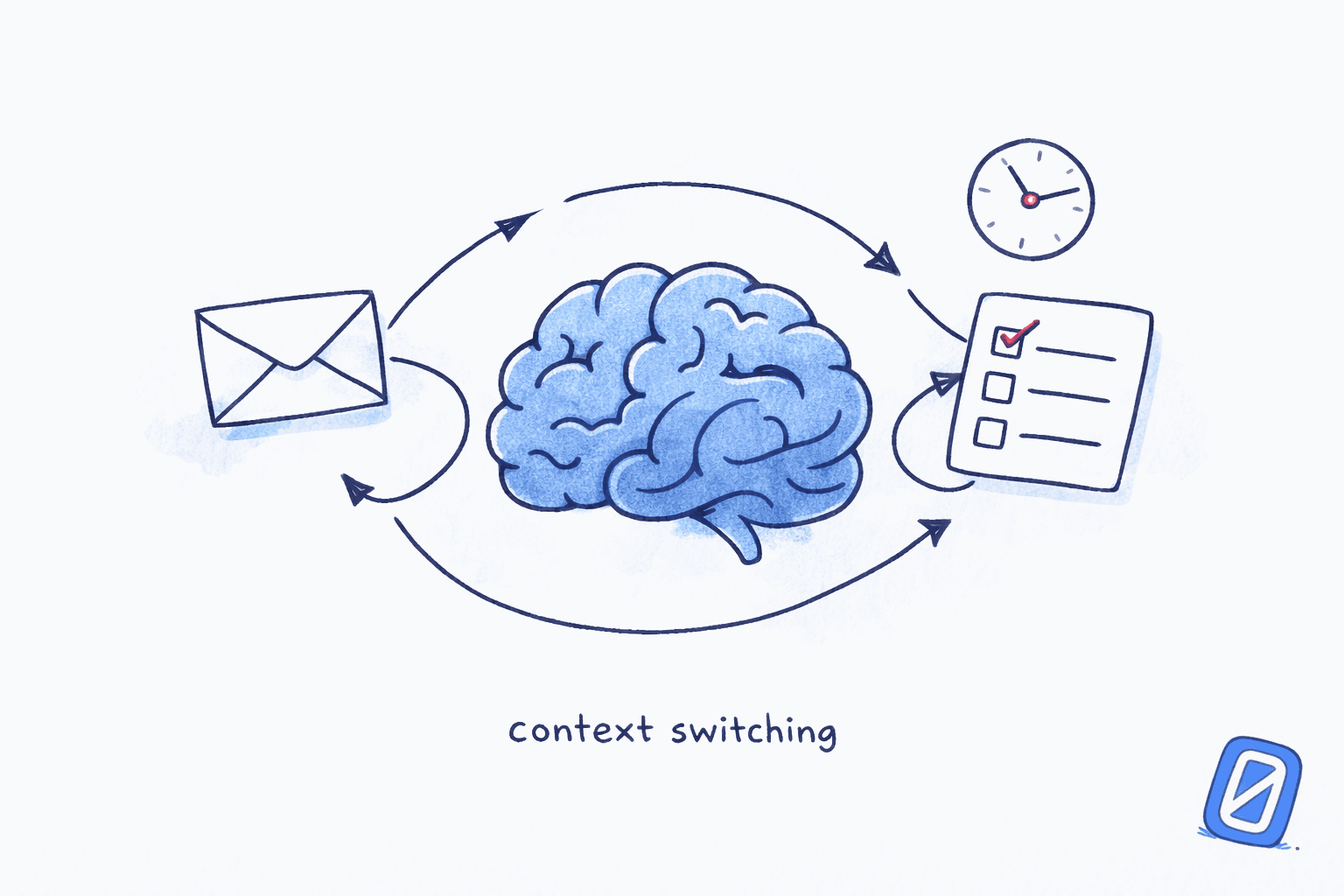
The JAMIA study on physician inbox patterns found that physicians switch to view electronic messages approximately 100 times per day. That rate exceeds the general knowledge worker average of 77 email checks per day. Each switch carries the cognitive cost documented by Gloria Mark, Professor of Informatics at UC Irvine, whose research shows it takes an average of 23 minutes and 15 seconds to fully return to the original task after an interruption. For a physician, those interruptions happen between patient encounters, during charting, and during the clinical thinking that determines treatment plans.
Mark’s work, published in her 2023 book Attention Span, identifies a core mechanism: “We have limited attentional resources or cognitive resources. What happens when we focus is that these resources drain.” For physicians whose primary job demands sustained clinical attention, the inbox is not just a distraction. It is a drain on the same cognitive resource pool that patient care depends on.
If the cognitive drain of switching between clinical tasks and administrative email resonates, Swizero applies a fixed card limit to your personal inbox, reducing each email session to a handful of AI-prioritized cards. For physicians who need to process administrative email without depleting the attention budget they need for patients, it is triage logic they already understand: see the most important items first, handle them, stop.
Apply the three-tier model you already know#
The email triage framework maps directly to the clinical triage system physicians learn in training. For your administrative inbox, the categories translate cleanly:
Immediate (Red): Time-sensitive administrative items with real consequences for delay. Credentialing deadlines, malpractice carrier requests, scheduling changes that affect patient access. These need same-day response.
Delayed (Yellow): Important but not urgent. Committee meeting agendas, CME planning, policy review requests. These get a scheduled response window, ideally batched into a single 20-minute block.
Minimal (Green): Newsletters, FYI-only threads, vendor outreach, informational updates. These get cleared in bulk. Left to clear, no reading required.
The key difference from standard email triage advice: physicians should separate this administrative triage from their EHR inbox workflow entirely. Mixing clinical and administrative message processing in the same session forces context switching between liability-bearing decisions and low-stakes administrative ones. That is exactly the kind of cognitive load that degrades decision quality over the course of a session.
Set a hard stop for email sessions#
The 2024 Medscape physician survey found that 49% of physicians reported feeling burned out, with 62% citing bureaucratic tasks as the primary driver. The inbox is not the only bureaucratic task, but it is one of the few where individual physicians can set boundaries.
The concept of a finish line for email is particularly relevant for physicians because their training already teaches them to work within constraints. A trauma surgeon does not keep operating until every patient in the hospital has been seen. An ER physician works a shift with defined start and end times. The inbox is one of the only professional tasks physicians face that has no structural boundary at all.
Honestly, this was the hardest section for me to write, because the systemic nature of physician inbox burden makes individual advice feel inadequate. The EHR inbox problem requires institutional solutions: better team-based inbox coverage, smarter notification routing, and the kind of workflow redesign that Dr. Sinsky’s team at the AMA advocates. But for the administrative email that remains within a physician’s control, applying constraints is not a workaround. It is applying clinical logic to a non-clinical problem.
How Does HIPAA Complicate Email Management for Doctors?#
HIPAA adds a compliance layer to physician email that does not exist for other professions. While the EHR inbox handles most protected health information (PHI), regular email is not immune. Administrative threads sometimes reference patient cases. Staff coordination messages may include scheduling details tied to specific patients. Insurance correspondence often contains PHI by default.
The HIPAA Journal’s 2026 compliance analysis documents that email remains one of the most common vectors for HIPAA breaches. The updated Security Rule now mandates full ePHI encryption, multi-factor authentication, and network segmentation for any system handling protected information. For physicians using personal Gmail or institutional email for any practice-related communication, the compliance burden is real and growing.
This creates a practical problem for email management. Physicians cannot simply forward, file, or delegate administrative emails with the same freedom as other professionals, because even ostensibly administrative messages may contain PHI. The result is slower processing, more careful reading, and an additional cognitive tax on every email decision.
The practical implication for physician email management: keep clinical communication strictly within the EHR and HIPAA-compliant systems. Use regular email exclusively for non-PHI administrative work. That separation is not just a compliance requirement; it is a cognitive relief valve. When you know that nothing in your Gmail inbox requires HIPAA-level scrutiny, you can process it faster, with a lighter cognitive load, using the triage framework described above.
Frequently Asked Questions#
How many emails do doctors receive per day?#
Primary care physicians receive an average of 77 EHR inbox notifications per day, according to a 2021 JAMIA study of 1,275 physicians. When combined with patient portal messages and regular administrative email, total daily message volume frequently exceeds 100-120 messages across multiple platforms.
Why is EHR inbox overload linked to physician burnout?#
The 2025 KLAS Arch Collaborative report found that 47% of ambulatory care physicians report excessive message volume, and overburdened physicians showed a 28-point drop in EHR satisfaction scores. The AMA’s 2024 survey found that 22.5% of physicians spend more than eight hours per week on EHR tasks outside scheduled work hours, a pattern directly correlated with burnout symptoms.
Can physicians use AI to manage their email inbox?#
AI-assisted inbox tools are emerging for both clinical and administrative email. A 2025 study in npj Digital Medicine found that AI-drafted responses to patient portal messages show promise for reducing cognitive burden, though 35-45% of erroneous drafts were submitted without editing, raising safety concerns. For administrative (non-clinical) email, AI prioritization tools can surface urgent messages without the patient safety risks.
What is “pajama time” in healthcare?#
Pajama time refers to EHR work performed outside scheduled hours, typically between 5:30 p.m. and 7:00 a.m. on weeknights and anytime on weekends. AMA data shows family medicine physicians spend an average of 86 minutes per night on after-hours EHR work, with inbox management as a primary component.
How can doctors separate EHR email from regular email management?#
The most effective approach is strict channel separation: keep all clinical communication (lab results, patient messages, referrals) within the EHR system and use regular email exclusively for non-PHI administrative tasks. Processing these in separate sessions, rather than switching between them, reduces context-switching costs and protects clinical decision quality.
Sources#
- Physicians’ Electronic Inbox Work Patterns and Factors Associated with High Inbox Work Duration. Ming Tai-Seale et al., Journal of the American Medical Informatics Association, 2021. PCPs receive average 77 inbox notifications/day.
- Electronic Health Record Usability, Satisfaction, and Burnout for Family Physicians. JAMA Network Open, 2024. Physicians spend 57.8% of clinical time in EHR.
- The Real Driver of Burnout: The 1.2-FTE Problem. National Academy of Medicine. Clinicians performing 1.2 FTEs of work while paid for one.
- Doctors Work Fewer Hours, but the EHR Still Follows Them Home. American Medical Association, 2024. 22.5% of physicians spend 8+ hours/week on after-hours EHR work.
- Family Doctors Spend 86 Minutes of “Pajama Time” with EHRs Nightly. American Medical Association. Family medicine after-hours EHR data.
- Message Burden 2025. KLAS Arch Collaborative. 47% of ambulatory physicians report excessive message volume.
- Phone Calls Stable, but Patient Portal Messages Keep Piling Up. American Medical Association. Portal messages 57% above pre-pandemic levels.
- Information Overload and Missed Test Results in EHR-Based Settings. Singh et al., JAMIA. 55.6% of PCPs reported notification systems enable missed results.
- AMA’s Christine Sinsky, MD, Explains EHR’s Contribution to Physician Burnout. The Hospitalist. 70-80% of physician work output classified as waste.
- Attention Span: A Groundbreaking Way to Restore Balance, Happiness and Productivity. Gloria Mark, UC Irvine, 2023. 23-minute refocus time after interruption.
- Medscape Physician Burnout & Depression Report 2024. Medscape/WebMD, 2024. 49% burnout rate, 62% cite bureaucratic tasks.
- HIPAA Compliance for Email. HIPAA Journal, 2026. Updated Security Rule requirements for email encryption and PHI protection.
- Vacation Days Taken, Work During Vacation, and Burnout Among US Physicians. Shanafelt et al., JAMA Internal Medicine, 2024. 70% of physicians work during vacation.
- Opportunities and Risks of Artificial Intelligence in Patient Portal Messaging. npj Digital Medicine, 2025. 35-45% of erroneous AI drafts submitted unedited.
Your inbox doesn't have to feel like this.
Swizero finishes your email in minutes, not hours.
Give your inbox a finish line